
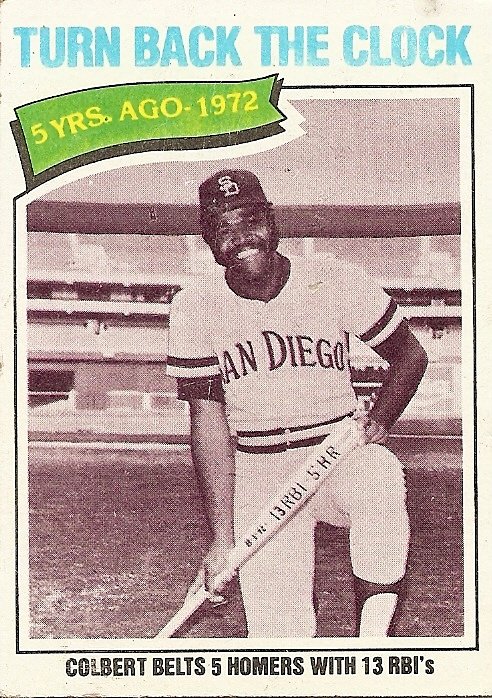
“The commercial overproduction of souvenirs means that you’re inculcated with nostalgia before you’re even old enough to feel nostalgic.”
– Svetlana Boym
I.
In the seventeenth century, a 19-year-old Swiss medical student named Johannes Hofer constructed the word nostalgia out of Greek root words meaning “return home” and “sickness.” For the next two centuries, the term held a tenuous foothold in the medical lexicon, doctors sporadically diagnosing patients with this homesickness disease and treating them with, among other things, opium, leeches, and trips to the Alps. On Wikipedia, the page for nostalgia includes the assertion, backed up by sounding like the truth if not by a scholarly citation, that this malady was particularly prevalent among soldiers in foreign-based armies experiencing defeat. Nobody yearns like a loser.
II.
I came out of the womb ass-first, a breech birth, and have continued living my life looking backward ever since. I wrote my first autobiography when I was seven. Its thesis was that life is boring. I reminisced about places where I’d once lived. The longest scene in the manuscript detailed one of my earliest memories, from my first home, a unit in a horseshoe of identical connected units in Willingboro, New Jersey. I must have been about two years old. I had gone outside to play and when I tried to come back inside I couldn’t figure out which of the identical doors was my own. They all looked exactly the same. Where is my home?
III.
The use of the term nostalgia to refer to a disease tapered off in the late 1800s. Industrialism and imperialism were in full steely bloom by then, which inspired in the powerful and their aspirants an embrace of a utopian future where looking backward would be laughable, if not punishable. Why look back when the future is so bright? Meanwhile, most everyone else got in motion, crossing oceans, crossing continents, massing in slums, disappearing into mines and factories and mills before dawn and coming out filthy after dusk, moving when company profit margins slipped too low, moving when hungry, moving when forced, moving by conscription, moving in a winding, wounding search for home. Maybe for too many to any longer call it an anomaly, a disease, the idea of home began to seem illusive, impossible, disappeared. Just a door no different from any other in a utopian infinity of doors.
IV.
I mark the beginning of my baseball card collection with a change of homes. I started collecting cards in late 1974, when we moved from Hopewell, New Jersey, to Randolph Center, Vermont. Since then I’ve been back to all the places where I lived growing up. To Willingboro, to Hopewell, to Randolph Center, to East Randolph. It’s always the same. I stand there looking at the house, the street, and maybe there’s an ache, but it’s not big enough to make me cry or write a poem, and nothing happens, and I get bored, and I go buy something.
V.
Nostalgia lost any lingering associations with homesickness in the twentieth century, as it became commodified on a mass scale. It had long been possible to buy things that had, for the buyer, associations with the past, but in the twentieth century the mass production of pop culture artifacts, and the aggressive marketing of those artifacts, helped the meaning of the word nostalgia complete its maturation from a disease of homesickness to a general longing for the past, an aching treatable not by leeches or opium but by oddly similar modern equivalents. For the last few decades the nostalgic have self-medicated by buying records and clothing and movie tickets and artifacts such as Fonzie lunchboxes if they have a little money or Fonzie’s leather jacket if they have a lot or Fonzie trading cards if they are the type to salve the ache of modern life, that long homeless losing streak, by holding and staring at and, most importantly, having flat rectangles of cardboard with photos on the front and text on the back. You can make a purchase. You can turn back the clock. You can have all you lost.
VI.
For a while now most of my days involve a search for home through the obsessive inspection of one after another of my childhood baseball cards. The latest of these cards to center my attention is the one pictured at the top of the page. It’s the only one in Topps’ 1977 “Turn Back the Clock” series that I own. There are others available on eBay. I know this because I checked eBay while, with another web page opened, I listened to the famous Grateful Dead show from the same year as the card, at Barton Hall in Ithaca, New York, the band in a groove as deep as any they’d ever found, the music so good it almost makes me weep, as if I’m returning to the golden center of a time that I can idealize as a perfect past even though I never experienced it. In these incredible times you can access practically anything you want. You can metastasize the nostalgia built on your experiences into a nostalgia that overflows the borders of your own memory. You can be nostalgic for places you’ve never seen, times you’ve never lived through, music you did not share in the creation of but which, now, due to the miracle of technology, you may well be able to have.
VII.
The other players with feats featured in the “Turn Back the Clock” series were either still playing or had been retired for a while at the time the cards came out. Nate Colbert, on the other hand, had just finished a two-city, sixteen at-bat, .178-hitting stinker of a final season in the major leagues. I wonder if seeing this card caused him to soak his famous muttonchops with the bittersweet tears of nostalgia, like a guy just given the boot by his true love looking at a picture of the two of them on their happiest day.
VIII.
The first thing that came to my mind when I wrote the above simile about a couple’s happiest day was the first long day I spent with a woman I met a few years ago, when I was working in a bookstore. She worked at the bookstore too. There wasn’t anything overtly special about that day. We poked around an aquarium store, spending a long time petting a black cat who was lounging around on top of one of the tanks. We went to a couple shoe stores looking for and not finding a pair of suede sneakers of a particular kind that I like to wear because they remind me of the 1970s. She bought sunglasses at an outdoor bazaar. We got something to eat at an Italian place, then sat and drank some coffee in a narrow, empty nook in the back of a small cafe. We walked to the subway station, and she kissed me goodbye as her train to Queens was rolling into the station.
IX.
A few years later we moved to Chicago. I wanted to go somewhere I’d never called home. After a couple weeks in our new apartment we went to an animal shelter just before it was due to close for the day. The woman volunteer who took us back to the cages told us she had one really special cat left. She opened the cage and the cat, black like the one from the aquarium store, got up and looked at us. Abby picked him up, and he reached over her shoulder for me, already purring. It was, for me, love at first sight. We took him back to our apartment, which on his arrival became our home. Sometimes, thinking of that moment when we first met, I pick him up and squeeze him and say to him, “Remember?”


 Cardboard Gods
You must be logged in to post a comment.